This is where the concept of dignity originates, a concept that forms part of the preamble to most laws, especially those concerning people with some degree of disability or dependency.Lack of competence or disability should not limit people's dignity, because dignity is an intrinsic quality of human beings, an absolute value that implies respect for each person's values, priorities and preferences, and is linked to people's ability to choose one path or another with a single limitation: respect for the dignity of others.
However, every right is backed by a law or regulation, and having a right implies that someone has a duty to uphold it.Without these duties, the right does not exist, because people who are vulnerable for various reasons (age, diversity, disability, dependency, etc.) are more likely to be affected by a limitation of their rights.
This vulnerability means that, in some situations, these people lose their right to be respected and situations of abuse may occur.
For this reason, in this section we want to highlight both our own and shared initiatives in the defence of the rights and autonomy of older people.
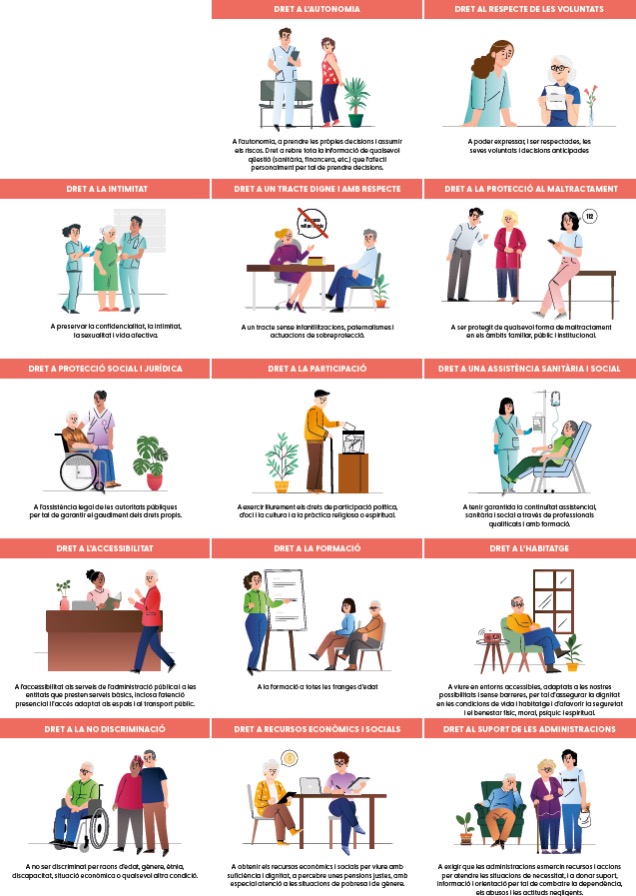
- The Comarcal Committee for the Rights of Older People has launched a series of initiatives to raise awareness of these rights, one of which is the document “Dignified Care for Older People Based on Rights” is one of them.The ultimate goal of all these initiatives is to prevent abuse to people who are receiving social and/or health support and their families, as well as the professionals who care for them.In this document, we want to focus on describing the new rights of these people that society is committed to guaranteeing, and that as citizens and professionals, we have both the right to enjoy, and the duty to defend.

- Through DipSalut, and in coordination and collaboration with the Inter-Comarcal Association of Councils for Older People in the Comarcas and Municipalities of Girona, the Diputació de Girona has created a comic sheet and a booklet illustrating fourteen fundamental rights.
- Course: Ageism, a silent form of discrimination.Course promoted by the Ernest Lluch Centre of the Menéndez Pelayo International University (CUIMP), directed by Dr. Núria Terribas, coordinated by Dolors Comas de Argemir and held in collaboration with the Víctor Grífols Foundation.You can watch the video of the various presentations at the following link. Access to the video